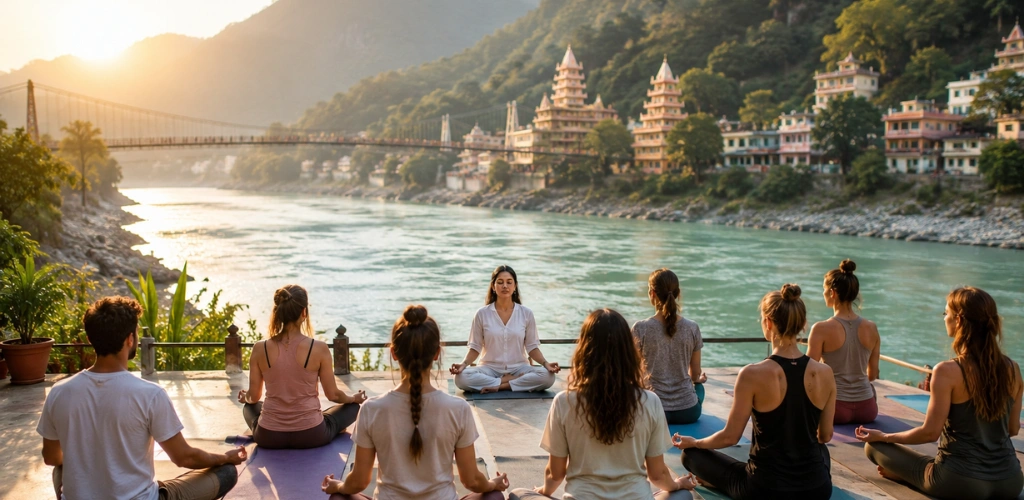
If you’ve been practicing yoga for a few months, or maybe you’ve never rolled out a mat outside of a living room video, and you’re now wondering whether you’re “ready” for a 200-hour Yoga Teacher Training in Rishikesh, here’s the honest answer: readiness has very little to do with how many downward dogs you can hold.
Rishikesh, the town where the Ganga rushes down from the Himalayas and yoga was practiced long before it became a global export, welcomes thousands of complete beginners into 200-hour programs every year. Most of them arrive with tight hamstrings, a bit of anxiety, and no real idea what a “chakra” is. Most of them leave certified, more comfortable in their bodies, and often surprised at how much of the training was about the mind rather than the pose.
This guide walks through what a 200-hour YTT in Rishikesh actually looks like for someone starting from zero.
What Does “200-Hour Yoga Teacher Training” Actually Mean?
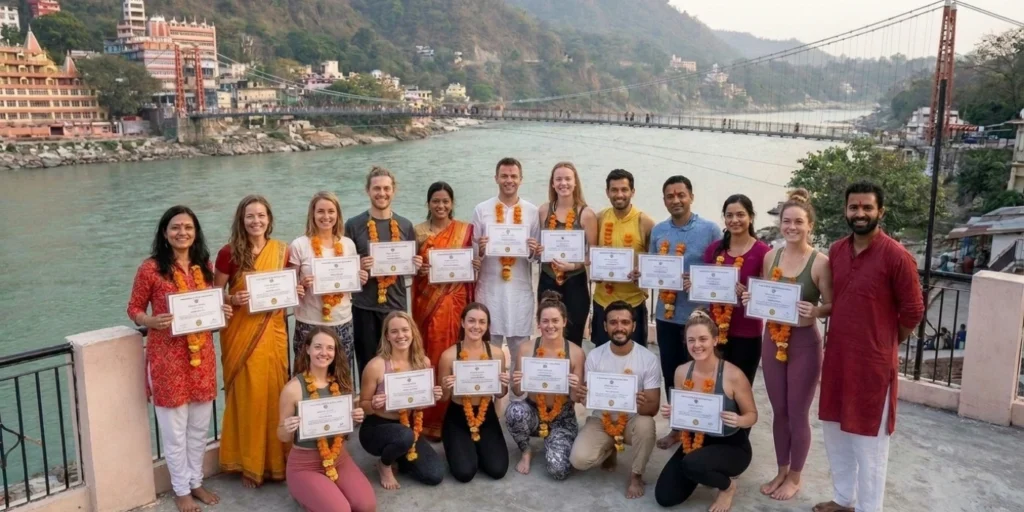
The 200-hour format is the foundational teaching certification recognized by Yoga Alliance and most major yoga governing bodies worldwide. It is where every beginner starts their yoga journey.
A 200-Hour Yoga Teacher Training Course mainly covers 5 elements of yoga:
Asana (Physical Postures)
Here you learn the physical movements. How to safely perform postures, science behind it, sequencing for teaching, and alignment.
Pranayama (Breathwork)
These are the breathwork exercises to calm your body, mind, and regulate your nervous system.
Yoga Philosophy
Classical texts such as the Yoga Sutras of Patanjali and the Bhagavad Gita, studied for their practical relevance rather than as academic history.
Anatomy and Physiology
How the body actually moves, and how to avoid injury when practicing or teaching.
Teaching Methodology
Voice projection, class sequencing, hands-on adjustments, and how to hold space for a room of students.
Overall, you don’t need to master all five before you arrive; you simply need curiosity and a willingness to be a beginner in public.
Is a 200-Hour YTT Really Suitable for Complete Beginners?
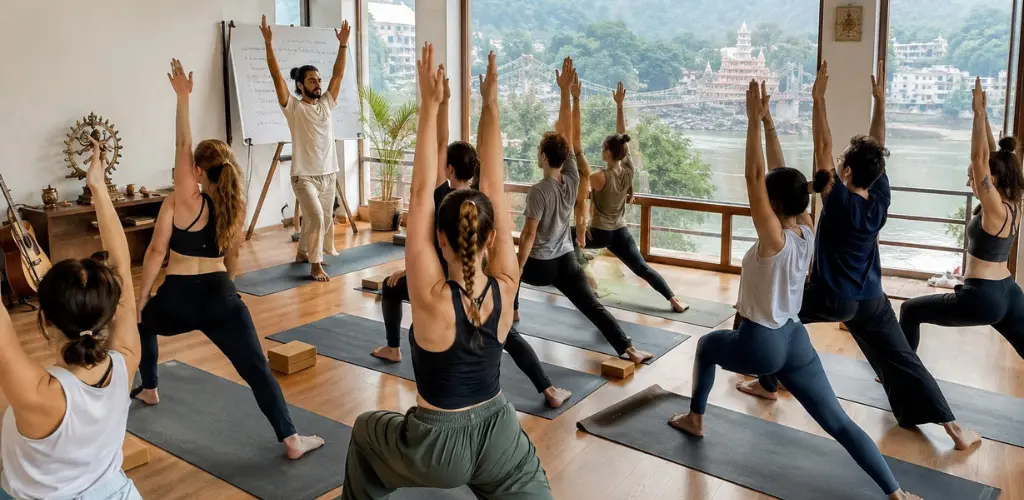
In general, yes, most 200-hour programs in Rishikesh are designed with beginners in mind, not against them. Schools build in modifications, props, and slower progressions specifically because a large share of every intake has never attended a regular yoga class before.
That said, a few honest expectations will help:
- You’ll be sore, as two to three physical sessions a day for several weeks represent a real physical adjustment, regardless of experience level.
- You don’t need flexibility to start. Flexibility is a result of the training.
- You should have basic fitness. General mobility and stamina for daily practice matter.
- Your mind needs to be ready too, not just the body. Long days, digital detox, early mornings, and communal living ask more of your patience than your hamstrings.
If you can commit to showing up daily and staying open to feedback, you’re a reasonable candidate.
Why Rishikesh Specifically?
Plenty of places offer 200-hour certifications. Rishikesh holds a particular pull for beginners for a few practical reasons.
It’s Considered the Birthplace of Modern Yoga’s Global Revival
Rishikesh is known as the birthplace of yoga. The founders of yoga, the holy sages and masters, have walked and lived in this land. That lineage still shapes how yoga is taught here.
The Environment Does Some of the Teaching
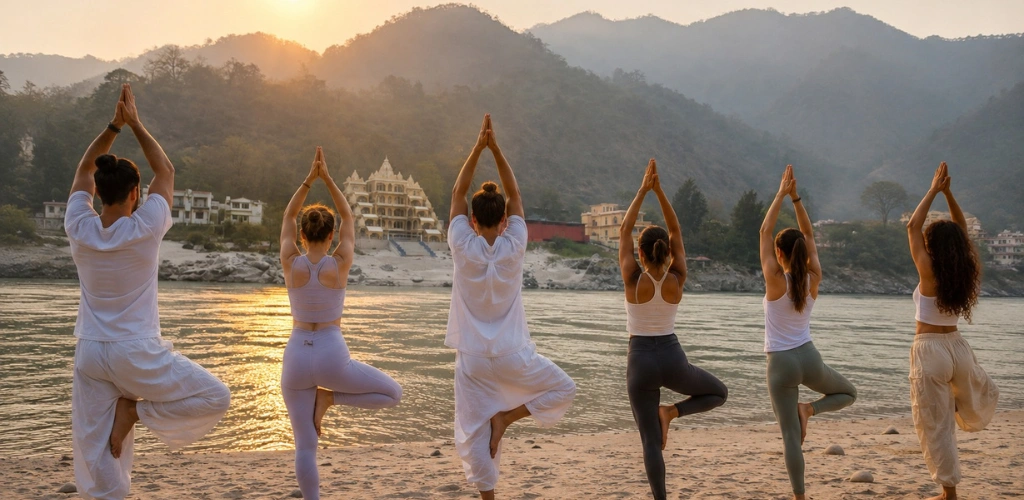
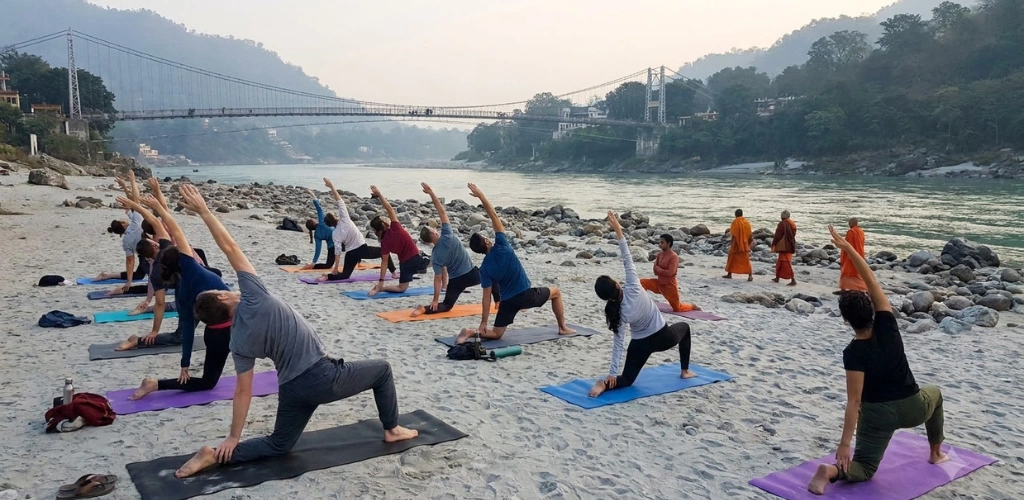
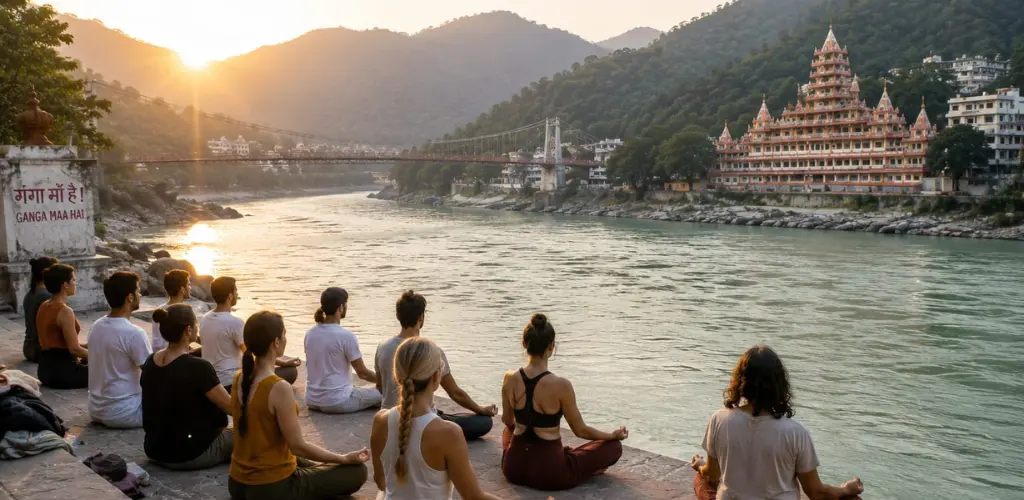
Practicing pranayama at sunrise by the Ganga, or attending an evening Ganga Aarti ceremony, gives beginners a felt sense of what yoga philosophy is describing in the classroom. It’s easier to understand the concept of prana when you can hear the river outside your window.
Cost and Accessibility
Compared to Western training programs, Rishikesh offers significantly lower course fees while maintaining Yoga Alliance-recognized curricula, which makes it genuinely accessible for people early in their yoga journey or on a limited budget.
Community of First-Timers
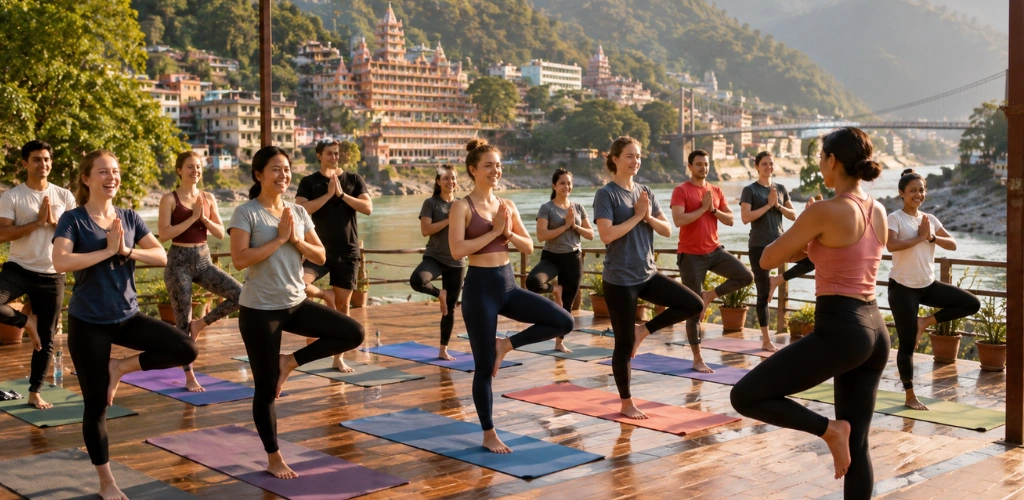
Because so many participants are beginners, there’s less pressure to “keep up” with advanced practitioners. You’re training alongside people at a similar starting point, which changes the emotional tone of the entire month.
How to Choose the Right School as a Beginner
This is where most people either set themselves up well or end up frustrated. A few things to check before enrolling:
Yoga Alliance Registration (RYS 200)
Confirm the school is a Registered Yoga School with Yoga Alliance, which means your certification will be recognized internationally if you ever want to teach.
Beginner-Friendly Curriculum
Ask directly whether the syllabus includes modifications for new students, or whether it assumes prior practice. Some schools design their curriculum only for intermediate practitioners who are trying to go deeper in their practice.
Class Sizes
Smaller batches mean more individual correction, which matters far more for beginners than for experienced practitioners who already know their alignment cues.
Teacher Experience and Teaching Style
Look for lead teachers with a documented lineage or training background, and read reviews that mention how patient and clear the instruction is, not just how “spiritual” the retreat felt.
What’s Actually Included
Accommodation, meals, study materials, and excursions vary widely between schools at similar price points. Get a clear breakdown before booking.
What You’ll Walk Away With
Beyond the certification itself, most beginners describe three concrete shifts after completing a 200-hour training:
- A personal practice they can sustain, rather than relying on studio classes or apps
- A working understanding of why yoga works, not just how to perform the postures
- The confidence to teach a beginner-level class, even if teaching isn’t the end goal
The certification opens the door to teaching internationally, at studios, gyms, retreats, or online, but plenty of graduates take the training purely for personal transformation and never teach a single class.
The Long-Term Benefits of Completing a 200-Hour YTT
In today’s fast-paced world, taking the time to complete a 200-Hour Yoga Teacher Training can offer a wide range of benefits that extend far beyond the classroom. It is important to note that these benefits are not limited to physical fitness alone, but also encompass mental, emotional, and spiritual growth.
Overall, students who complete the training often report the following outcomes:
- Improved physical health: Regular practice of asanas can enhance flexibility, strength, and balance.
- Enhanced mental clarity: Pranayama and meditation techniques help reduce stress and improve focus.
- Deeper self-awareness: Studying yoga philosophy encourages introspection and personal growth.
- Stronger sense of community: Living and training alongside like-minded individuals fosters lasting connections.
In conclusion, the journey of a 200-Hour YTT is not just about becoming a certified yoga teacher. It is about embarking on a transformative path that can positively impact various aspects of one’s life. Whether the goal is to teach professionally or simply to deepen one’s personal practice, the skills and insights gained during this training can serve as a valuable foundation for years to come.
Yoga Course in Rishikesh – Atha Yoga Sadhana
Atha Yoga Sadhana runs its 200-hour YTT in Rishikesh with Yoga Alliance USA certification. It is a yoga school in Rishikesh where batches are capped at 15 to 20 students, which means beginners get actual correction on their alignment instead of getting lost in a crowd of 40.
The curriculum covers Hatha and Ashtanga Vinyasa, pranayama, meditation, and yoga philosophy, taught by instructors with years of teaching experience rather than teachers fresh off their own certification.
Accommodation, three meals a day, study materials, and weekend excursions are built into the course fee, so there’s no separate budgeting to do once the training starts. The course structure adjusts based on where each batch is starting from, rather than assuming everyone arrives with the same level of practice.
If you’re still weighing your options, join our 200-hour Yoga TTC in Rishikesh, built specifically with beginners in mind, small batches, real support, and a curriculum that takes you through the basics step by step. Feel free to reach out if you have questions before you book anywhere.
Beyond the 200-hour course, Atha Yoga Sadhana also runs 100-hour YTT, 300-hour YTT, and 500-hour YTT programs for students who want to continue their training after the foundational level, along with a 200-hour plus 50-hour aerial yoga course and a dedicated sound healing teacher training. For those not ready to commit to a full certification, shorter 7-day and 10-day yoga retreats are available as well. All programs run at the Rishikesh campus, with the same courses also offered at a second location in Bali.
Conclusion
A 200-hour Yoga Teacher Training in Rishikesh isn’t about arriving as a finished practitioner. It’s about arriving willing to be taught, in a place where that process has been refined for generations. If you’re a beginner weighing whether you’re “ready,” the training itself is built to meet you where you are and take you somewhere further than you expected.
The mat doesn’t care how long you’ve been practicing.
Frequently Asked Questions (FAQs)
1. Do I need to be vegetarian or give up coffee?
Most ashram-style schools serve vegetarian, sattvic meals as part of the yogic lifestyle, and some request that students avoid caffeine, alcohol, and smoking during the course.
2. Is 21 to 28 days really enough to become a teacher?
It’s enough to meet the internationally recognized 200-hour threshold and to teach beginner and general-level classes confidently. Many teachers go on to pursue a 300-hour training later for advanced certification, but the 200-hour level is a complete, standalone qualification.
3. What should I pack?
Pack light. Bring a few comfortable clothes, something warm for early mornings, a notebook, and any medicine you need.
4. How much does a 200-hour yoga teacher training in Rishikesh cost?
Costs typically range from budget ashram stays to premium retreat-style programs, depending on room type, meals, and extra excursions. Compare what’s included (accommodation, meals, study material) rather than just the headline price.
5. Do I need a visa to attend yoga teacher training in India?
Most foreign nationals need a tourist visa or e-visa to attend a yoga teacher training in India, since these programs aren’t classified as formal education. Check current visa rules for your country before booking.
6. What is the best time of year for yoga teacher training in Rishikesh?
Rishikesh is most comfortable for training between September and April, before summer heat sets in. Many schools also run peak-season batches around the International Yoga Festival in March.
7. What is the difference between 200-hour and 300-hour yoga teacher training?
The 200-hour training is the foundational certification required to teach beginner-level classes, while the 300-hour is an advanced course typically taken after gaining teaching experience. Together they lead to the 500-hour RYT credential.
8. Is Rishikesh safe for solo travelers doing yoga training?
Rishikesh is a well-established destination for solo travelers and yoga students, with a large international community and established schools accustomed to hosting first-time visitors alone.
9. Can I do a 200-hour YTTC if I’ve never done yoga before?
Yes, most participants in any given batch are beginners. Programs are structured to build skills progressively, so no prior yoga experience is required to enroll.